
About Impregnated
Impregnated activated carbon is carbon treated with a chemical reagent that reacts with gases the carbon would not hold well on its own, such as hydrogen sulfide, ammonia, chlorine, sulfur dioxide and formaldehyde. The process is called chemisorption: the gas is bound on the carbon by a chemical reaction, not only by physical adsorption.
The impregnation must be carefully controlled. The reagent has to be loaded at the right level and spread evenly without blocking access to the pores. Properties such as activity, moisture and particle size are controlled to get the best filter efficiency and service life.
What sets it apart
Targeted removal
Each impregnant is matched to a gas family: acid gases, alkaline gases, sulfur compounds, mercury and others.
Even loading
Controlled loading and distribution of the reagent, so the pores stay open.
Choice of base carbon
Granular or pellet base to suit your pressure drop and contact time.
Used in many filters
Water filters, gas purification units, odor control and protective filters.
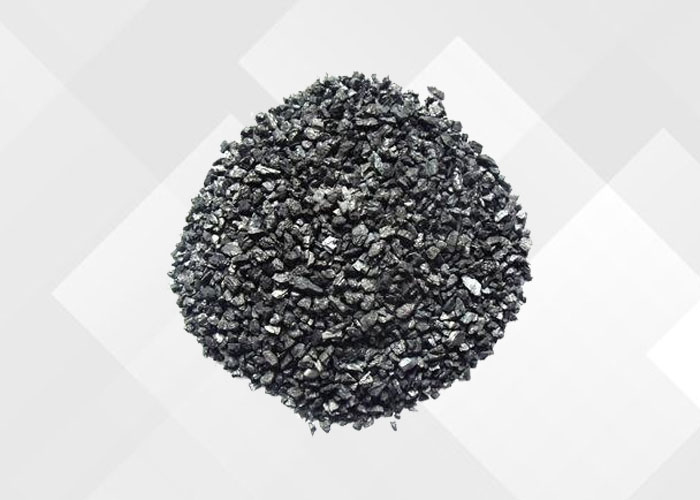
Impregnated carbon
Granular carbon before and after treatment is applied to a specific grade.
Typical specification
| Application | Impregnant |
|---|---|
| Acid gas removal | KI, KOH, Na2CO3, K2CO3 |
| Ammonia removal | H3PO4, NiCl2 |
| Acid gas removal (inert atmospheres) | CuO |
| Military applications | Cu-Cr-Ag-TEDA |
| Mercury removal | S, I2 |
| Formaldehyde removal | Tris-amino |
Impregnated carbon is used in water filters, military applications and gas purification.